Language level without the accent bias
How a CEFR rating measures the proficiency a role needs without penalising how you sound.
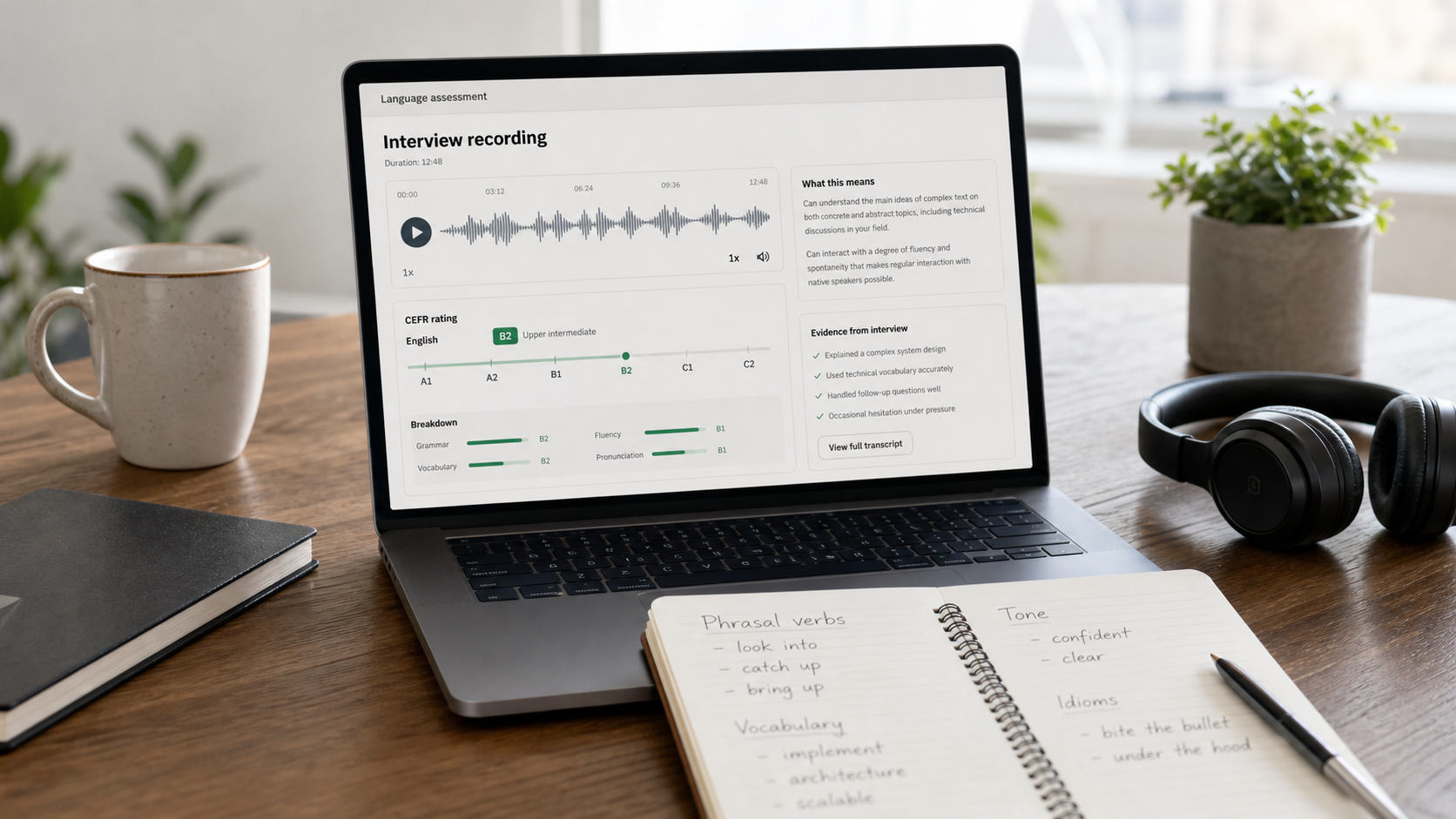
Language requirements in hiring are often a blunt instrument. A job says fluent English and a reviewer makes a snap judgement from a few sentences, frequently coloured by accent rather than ability. That is unfair and it filters out people who can do the job well in the language the role actually needs.
What CEFR measures, and what it ignores
The Common European Framework of Reference for Languages rates proficiency on a scale from A1 to C2. It looks at whether you can understand, explain, and reason in the language at the level the work demands. It is about comprehension and expression, not about how native you sound. A clear C1 explanation of a tradeoff is a C1 explanation regardless of accent.
XpressApply rates the specific language a role requires from your interview transcript. If a backend role needs English B2, the system checks whether your answers show B2-level proficiency for that kind of technical conversation. It does not reward sounding local and it does not penalise sounding foreign.
Why this helps non-native speakers
Most engineers building for European markets are not native speakers, and they work effectively across languages every day. A CEFR rating gives them a fair, job-relevant measure instead of a vibe check. You see the rating on your scorecard as evidence, with the level the role asked for next to the level you demonstrated.
The goal is a measure you can trust and contest. If you think a rating is off, you have the transcript and the human-review path. Accent never enters the score, only whether you can do the job in the language the job needs.
Ready to interview once and apply to many?
Browse open roles and your single interview gets scored for every role you fit.
See open rolesRelated

What a fair AI interview actually looks like
Evidence over keywords is easy to say. Here is how the rubric, the recording, and the human-review path make it real.
Open
Interview once, apply to many: the maths
Why repeating yourself for every employer is a tax on candidates, and how one re-scored interview removes it.
Open