Interview once, apply to many: the maths
Why repeating yourself for every employer is a tax on candidates, and how one re-scored interview removes it.
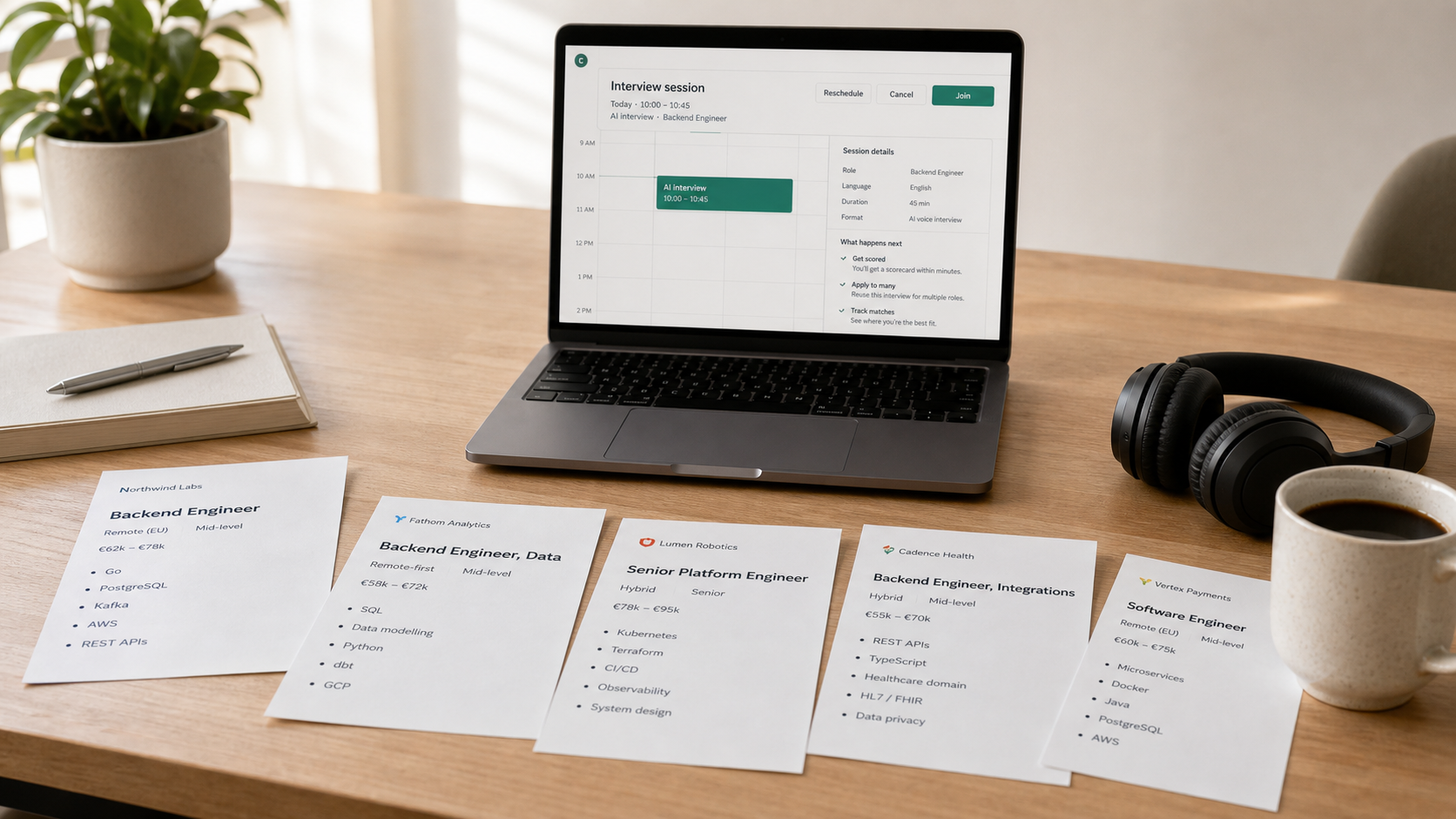
Applying for jobs is repetitive in a way that quietly costs candidates real money. You answer the same first-round questions five times for five companies, each one an hour of your life, often during the workday. The information barely changes between interviews, but you pay the tax again every time.
Where the time actually goes
Say you are a mid-level backend engineer applying to four companies in the same role family. Each first interview takes about an hour, plus prep and scheduling overhead. That is roughly half a working day spent repeating yourself, and most of those conversations cover the same ground: a system you owned, how you handle failure, how you reason about data.
If those four roles screen for nearly identical things, asking you to do four near-identical interviews is waste, and it falls entirely on you. The companies are not coordinating, so you absorb the duplication.
One interview, scored four ways
XpressApply groups near-identical roles across companies into a role family with one shared questionnaire. You interview once. That single conversation is then re-scored against each company's own rubric, so each employer still sees a tailored scorecard for their role. You did the work once. Four companies got a fair, specific read on you.
The maths is simple. Four interviews become one. The hour you spend is the hour you would have spent anyway, but it now counts everywhere the family applies. New roles that join the family later can score your existing interview without asking you back, so the value of that one hour keeps compounding.
Ready to interview once and apply to many?
Browse open roles and your single interview gets scored for every role you fit.
See open rolesRelated
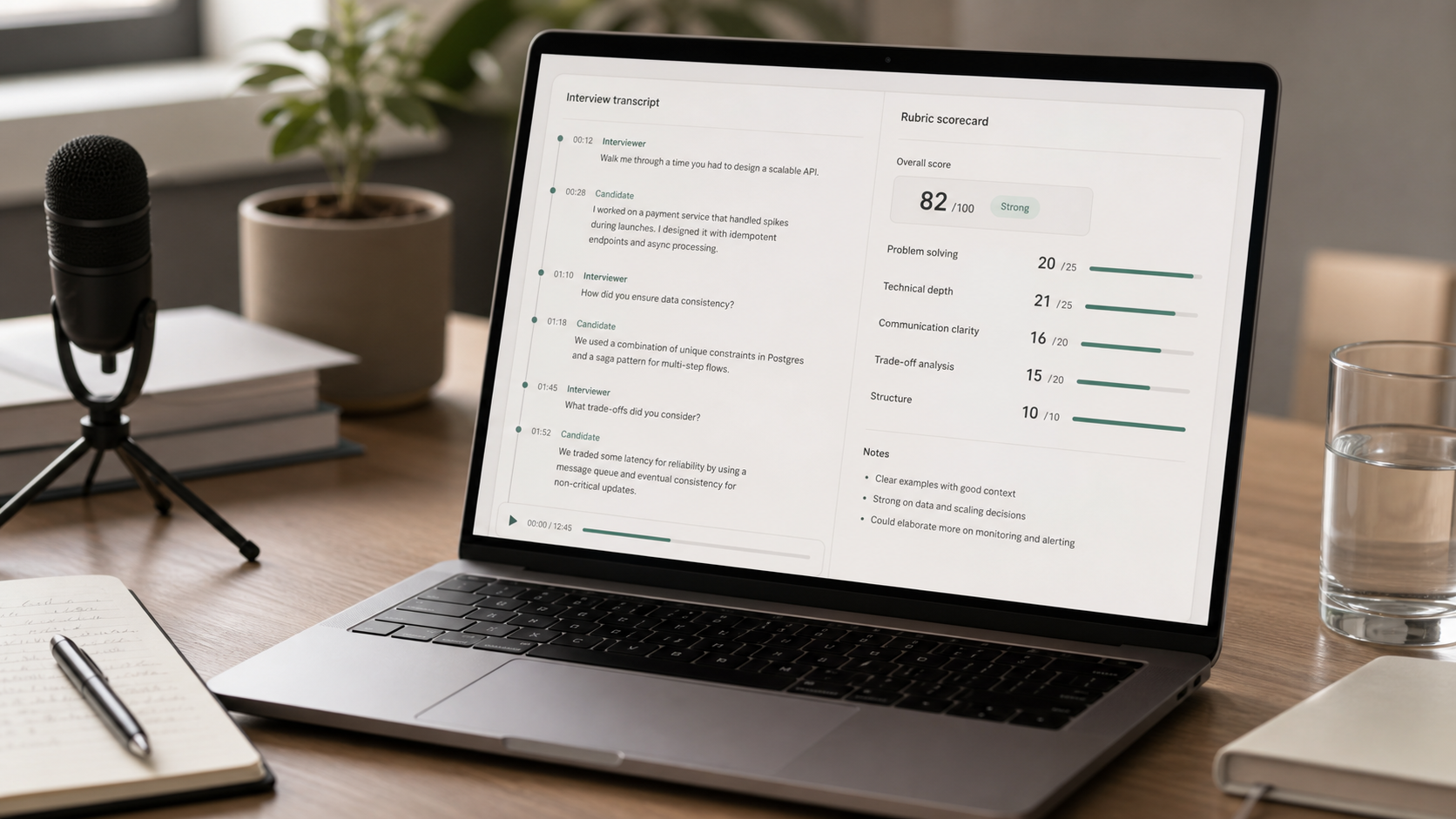
What a fair AI interview actually looks like
Evidence over keywords is easy to say. Here is how the rubric, the recording, and the human-review path make it real.
Open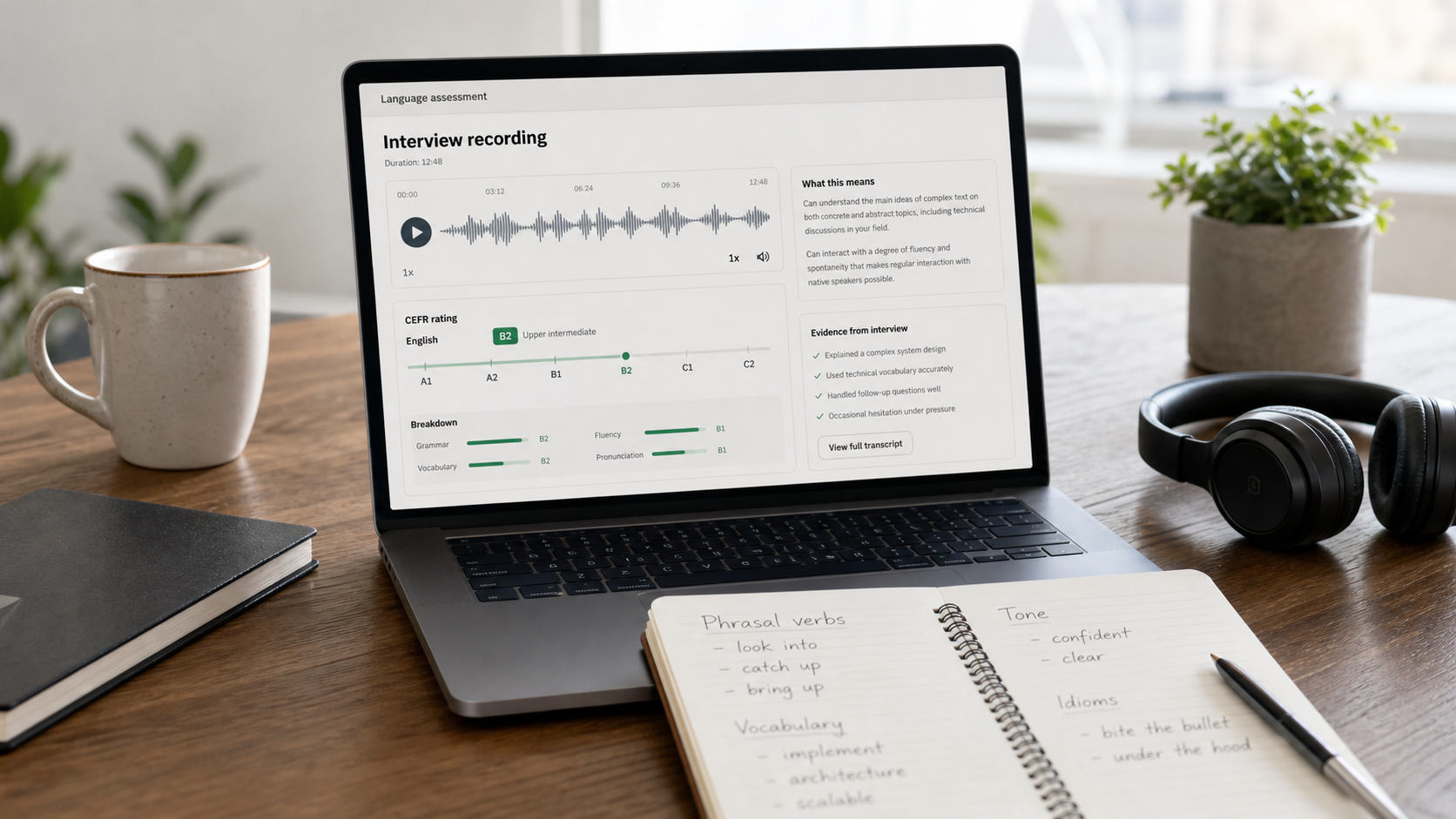
Language level without the accent bias
How a CEFR rating measures the proficiency a role needs without penalising how you sound.
Open