How to prepare for a voice interview
Test your mic, pick a quiet room, and answer with worked examples. A short, honest prep guide.
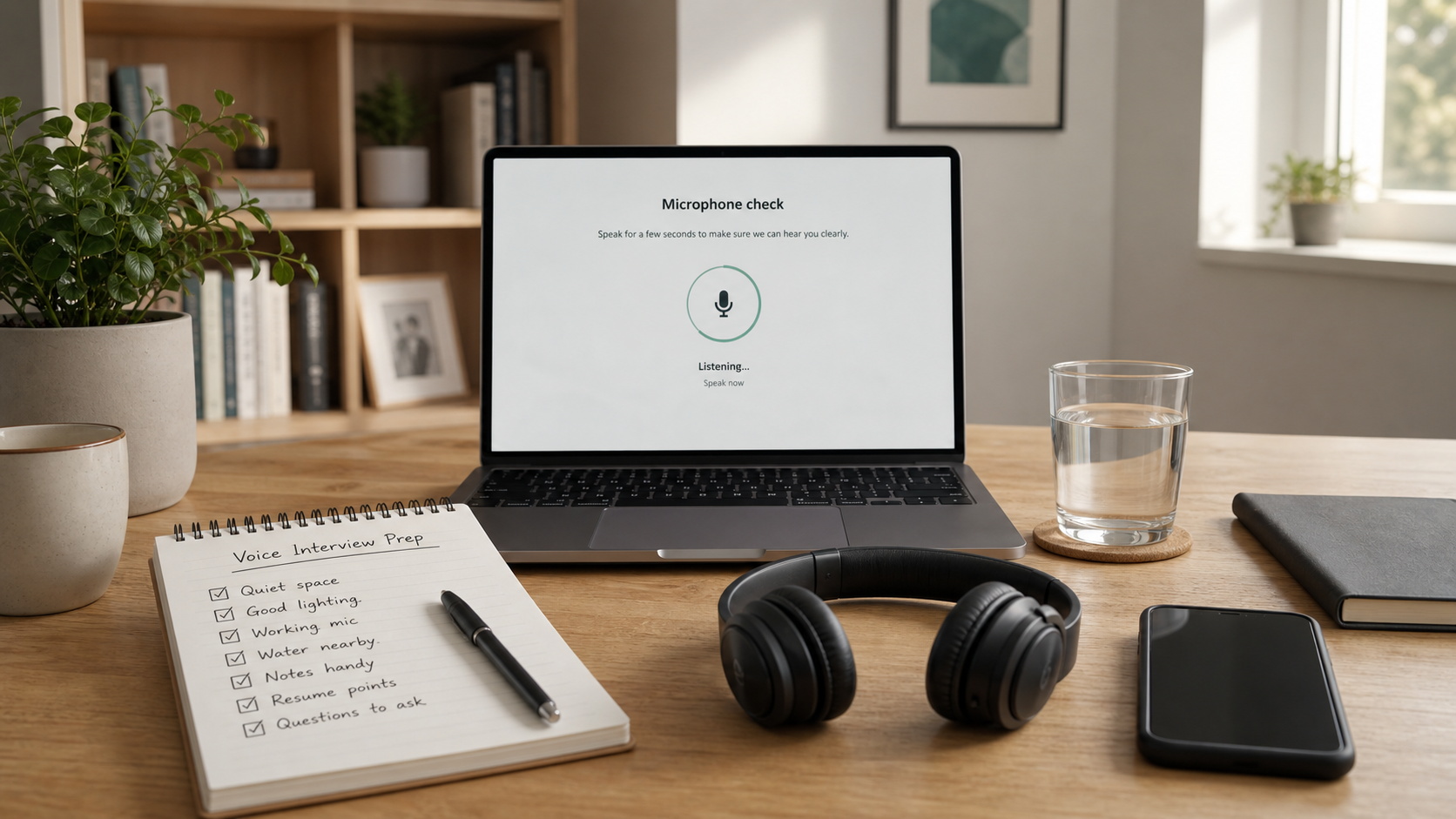
A voice interview is less stressful than it sounds once you know what it rewards. It is about 20 minutes, you can see live captions, and it is the same conversation several companies will score, so you only do it once. A little setup goes a long way.
Get the basics right first
Test your microphone and run the readiness check before you start. Pick a quiet room and close the door. Use headphones if you have them, since they cut echo and keep the audio clean. A weak connection or a noisy kitchen is the most common reason a good answer comes through muddy, and that is entirely avoidable.
You do not need a script. The interview is looking for evidence, so the strongest thing you can do is bring real examples. Think of two or three systems you actually owned and the hardest part of each. You will be asked to go deeper, so pick examples you remember well enough to reason about under follow-up questions.
Answer with worked examples
When you get a question, reach for a concrete situation rather than a general statement. Saying you keep writes idempotent is fine. Walking through the time a payment provider timed out mid-transaction and how you guaranteed correctness is far stronger, because it gives the rubric something specific to score.
Finally, relax about perfection. You can pause, think, and restate an answer. The system rates the substance of your reasoning, not your delivery, and you can read your transcript afterward. Treat it like explaining your work to a thoughtful colleague who happens to take very good notes.
Ready to interview once and apply to many?
Browse open roles and your single interview gets scored for every role you fit.
See open rolesRelated
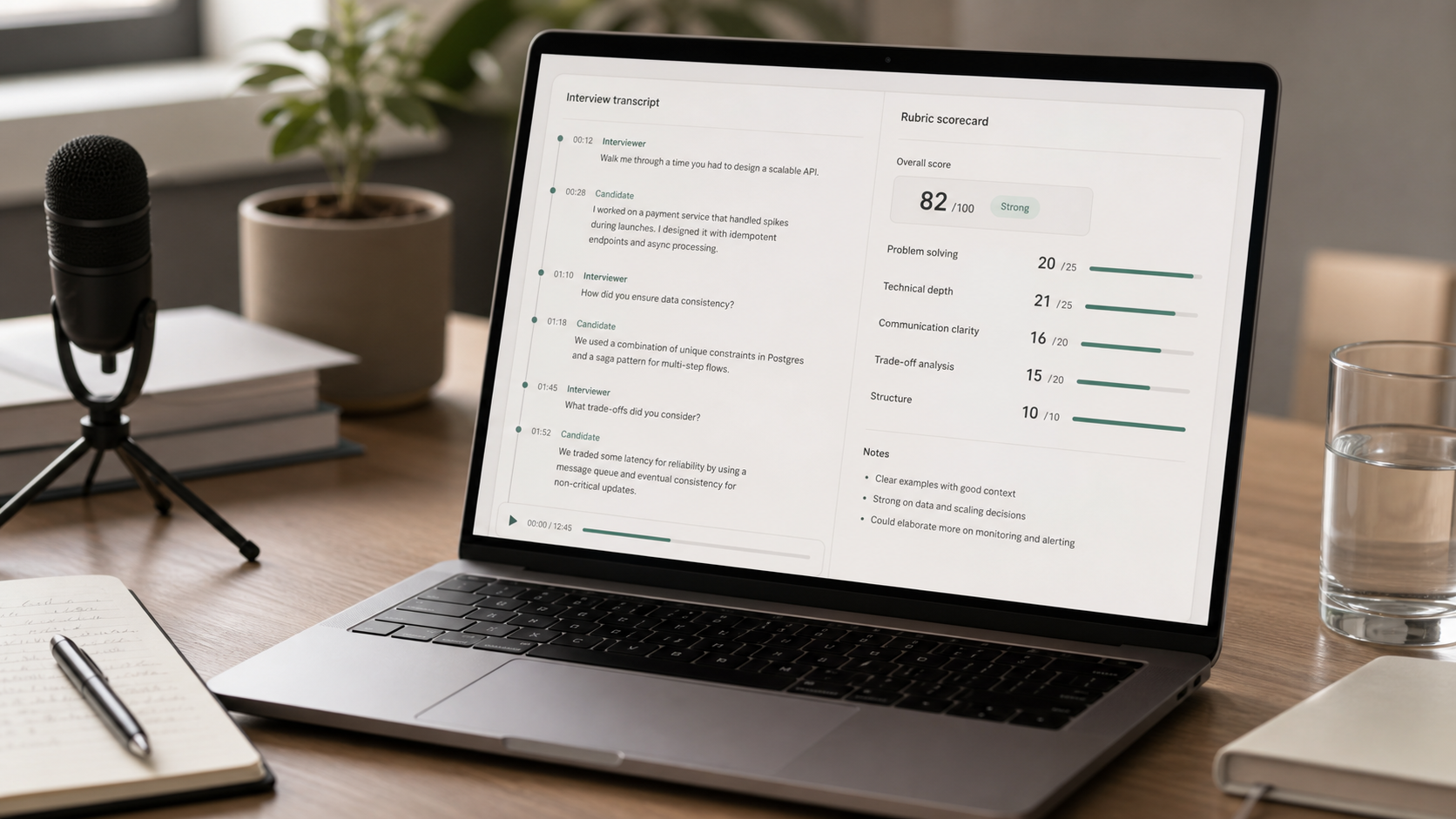
What a fair AI interview actually looks like
Evidence over keywords is easy to say. Here is how the rubric, the recording, and the human-review path make it real.
Open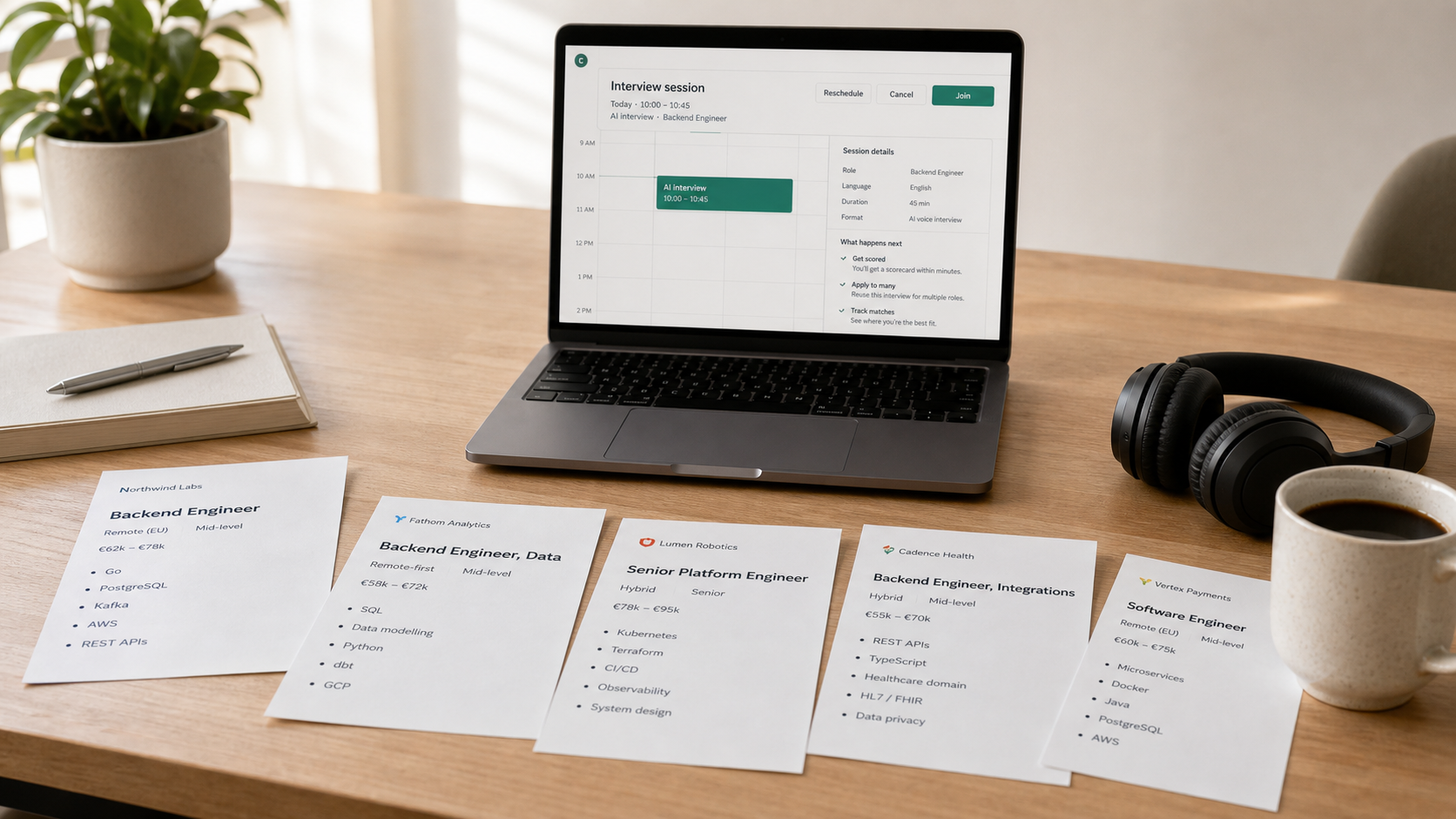
Interview once, apply to many: the maths
Why repeating yourself for every employer is a tax on candidates, and how one re-scored interview removes it.
Open