Understand your scorecard
Your scorecard is the structured result of your interview, scored against a role's rubric. This guide explains how to read it, why each rating links to evidence, and what to do if something looks wrong.
Read it criterion by criterion
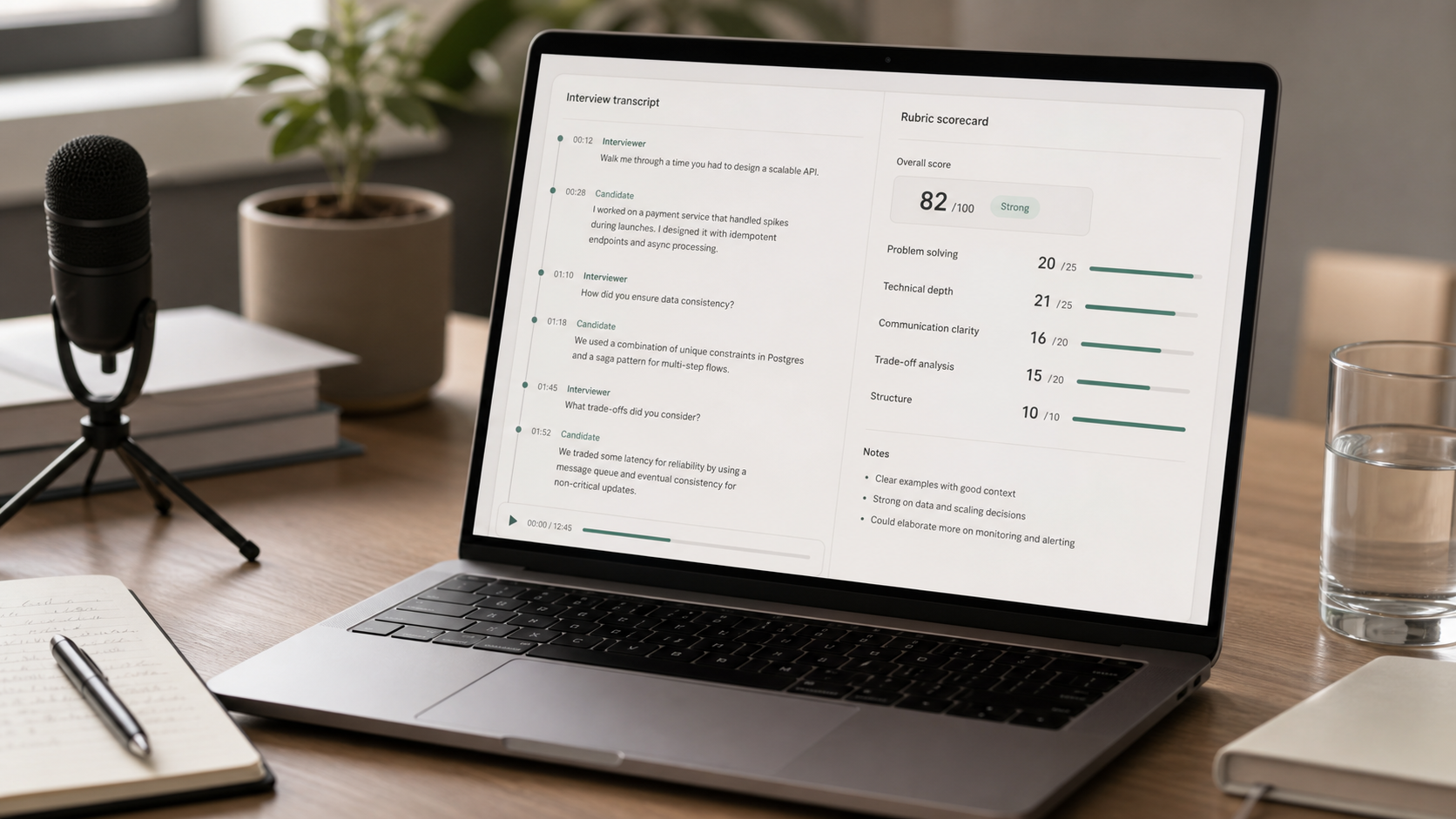
A scorecard is not a single opaque number. It breaks a role down into the criteria it actually screens for, and marks each one as met or not. For a backend role you might see SQL and data modelling, correctness under failure, and on-call ownership, each scored on its own. That structure tells you where you are strong and where there is a gap.
Follow the evidence
Every rating links back to something you said. If your data modelling is rated strong, the scorecard points to the moment in your transcript where you reasoned through an index versus a schema change. This is what makes the result checkable. You are never asked to trust a score you cannot trace.
See how it varies by company
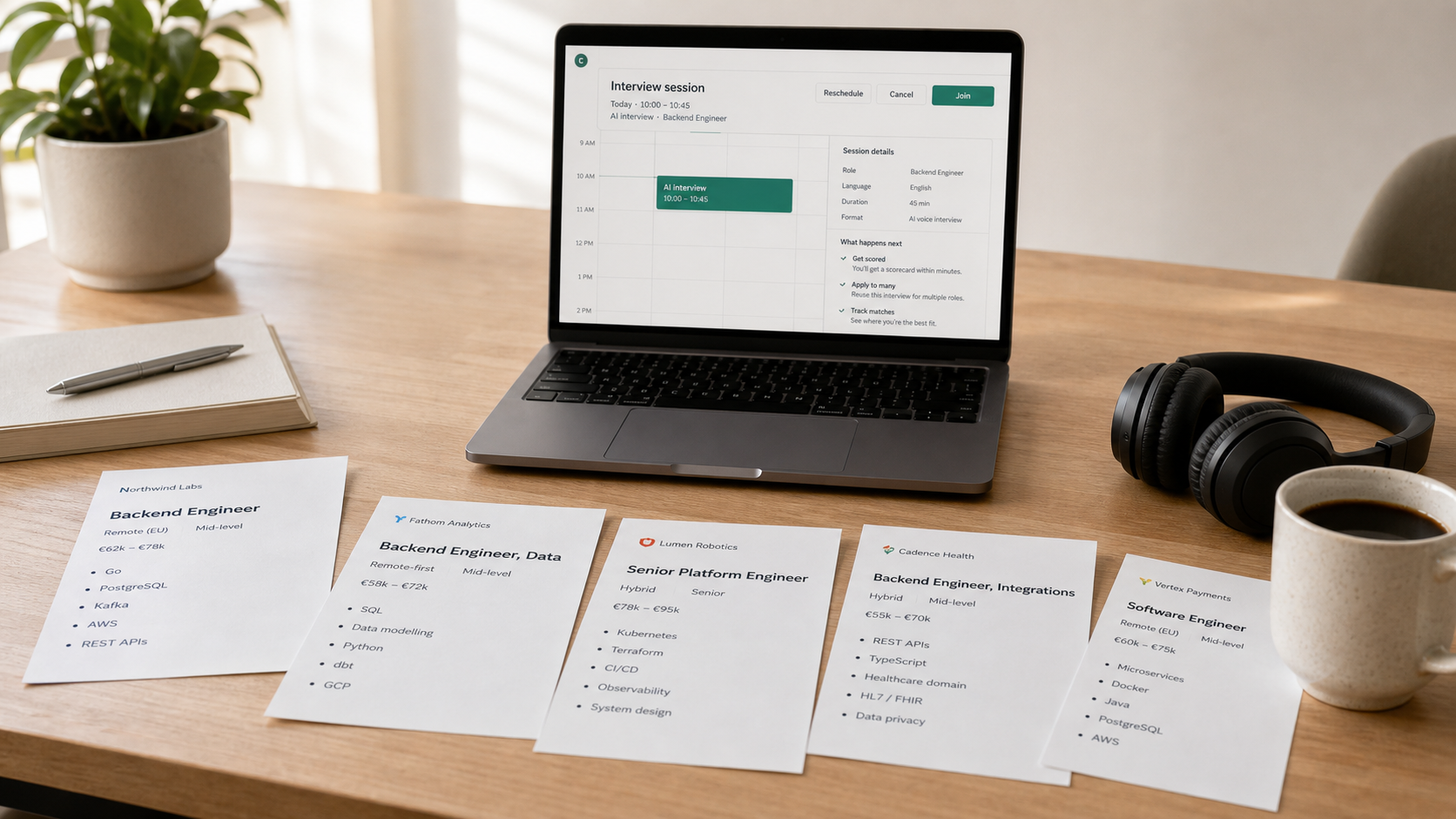
Because one interview is re-scored across a role family, the same transcript produces a different scorecard for each company. A criterion that is a must-have at one employer might be a nice-to-have at another, so a gap that lowers one match may barely matter for the next. Compare the scorecards side by side to see where you fit best.
Challenge it if it is wrong
If a rating does not hold up against what you actually said, you can request a human review under the EU AI Act. A person looks at the same transcript and rubric the system used, so your challenge is grounded in the same evidence. The scorecard is a starting point you can contest, not a verdict.
Put it into practice
Apply to a role and your single interview gets scored for every role you fit.
See open roles